 How-to
7 Best Ways to Dispose of Concrete
Last Updated: October 25, 2026
Quick Summary
The best ways to dispose of concrete depend on load size and cleanliness: clean rubble often goes free to a recycling facility, mixed debris goes to a transfer station, and large or fast jobs call for a roll-off or trailer rental. Reusing or donating usable pieces avoids fees entirely.
- Clean concrete is one of the most recyclable construction materials, so recycling is usually cheapest.
- Recycling yards reject loads with rebar, paint, soil, or trash mixed in.
- Transfer stations may bill a minimum even for a half load.
- Roll-off pricing includes set tonnage, and heavy concrete can trigger per-ton overage.
- Never pour concrete washout down a storm drain or onto bare soil.
Table of Contents
- 7 Best Ways to Dispose of Concrete
- Compare Concrete Disposal Methods at a Glance
- Concrete Recycling: Turn Rubble Into Recycled Concrete
- How to Get Rid of Concrete for Free
- Concrete Disposal Cost: What You'll Pay for Each Option
- Reusing Broken Concrete on Your Property
- Preparing Concrete for Disposal: Size Limits, Safety, and Transport
- Handling Contaminated Concrete and Washout
- Frequently Asked Questions
7 Best Ways to Dispose of Concrete
The best ways to dispose of concrete depend on how much you have, how fast it needs to go, and whether it's clean enough to recycle. This guide breaks down every realistic option, from a free recycling drop-off to a driveway-friendly trailer, so you can pick the cheapest route that actually fits your project. Below, we compare costs, acceptance rules, and the preparation steps most guides skip.
Concrete disposal is the process of removing broken slabs, blocks, steps, and rubble from a site and routing it to recycling, reuse, or a licensed landfill. Clean concrete is one of the most recyclable construction materials there is, which is why the cheapest options usually involve recycling rather than dumping.
Compare Concrete Disposal Methods at a Glance
Here's the short version: small clean loads go free to a recycling facility, big mixed loads go to a transfer station, and anything you can't haul yourself calls for a roll-off or trailer service. The table below summarizes each route.
| Method | Best For | Cost Signal | Effort |
|---|---|---|---|
| Recycling facility drop-off | Clean rubble, small loads | Lowest, often free | You haul |
| Transfer station / landfill | Mixed debris, no recycling nearby | Moderate, by weight | You haul |
| Roll-off or trailer rental | Large or fast jobs | Priced by size and duration | Minimal |
| Reuse on your own property | Landscaping, retaining walls | Free | Moderate |
| Donation or giveaway | Usable blocks and pavers | Free | Pickup logistics |
| Curbside or municipal pickup | Very small amounts | Varies by hauler | Low |
| Hiring a hauling crew | Contractors, tight timelines | Quote-based | None |
The real difference between these options comes down to one question: who does the lifting? Everything else is a detail.
Concrete Recycling: Turn Rubble Into Recycled Concrete
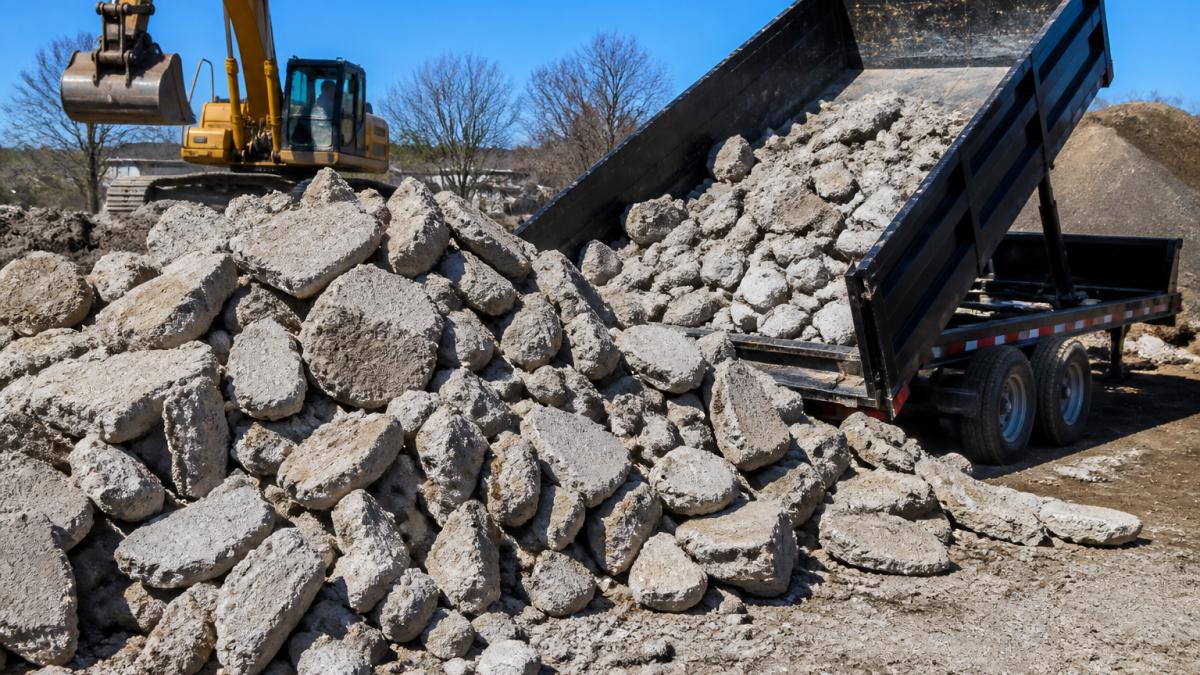
Concrete recycling is the practice of crushing broken concrete into reusable aggregate instead of burying it. Recycled concrete becomes a rock base for driveways, a sub-base under patios, and fill material for grading projects. Many facilities accept clean concrete at little or no charge because the crushed product has resale value.
What most guides miss is the cleanliness requirement. Recycling yards reject loads with rebar, paint, soil, or trash mixed in, because those contaminants ruin the crusher output. Separate your concrete before you arrive and you'll save both money and a rejected trip.
Check with your local facility on EPA guidance on construction and demolition materials before hauling, since accepted materials and size limits vary by site. A quick call saves a wasted drive.
How to Get Rid of Concrete for Free
Getting rid of concrete for free is realistic if the load is clean and you can transport it yourself. Three routes work: a recycling facility that waives fees for clean rubble, a neighbor or landscaper who wants fill material, or a donation listing for usable blocks and pavers.
Here's how we'd approach it:
- Call two nearby recycling yards and ask about clean concrete acceptance and any fee
- Post usable pieces on a local giveaway group with clear photos and dimensions
- Ask a landscaper if they need fill for a grading job
- Confirm your vehicle and trailer can handle the weight before loading
Watch out: "free" disposal gets expensive fast if you overload a borrowed trailer or damage your own vehicle's suspension. Weigh the load or split it into trips.
Concrete Disposal Cost: What You'll Pay for Each Option
Concrete disposal cost depends on three variables: weight, distance, and how much labor you supply. Most guides mention a fee and move on. Here is the comparison they skip, with the cost structure behind each route so you can estimate your own job.
| Route | How it's priced | What drives the number | Typical cost signal |
|---|---|---|---|
| Recycling facility drop-off | Per ton, sometimes flat per load | Cleanliness, piece size, whether the yard resells the crush | Lowest; clean loads are often free or a small per-ton fee |
| Transfer station or landfill | Per ton, with a minimum | Weight, plus any surcharge for mixed debris | Moderate; minimum charges apply even to small loads |
| Roll-off container rental | Flat rate by container size plus tonnage overage | Rental days, weight over the included tonnage, delivery distance | Highest per job for small loads; efficient for large ones |
| Trailer or hauling crew | Quoted per job | Load size, access, labor, disposal fees passed through | Quote-based; ask whether disposal is included |
Three cost mechanisms most people miss:
- Minimum charges. A transfer station may bill a minimum even if you arrive with a half load. Ask for the minimum before you drive.
- Tonnage overage. Roll-off pricing usually includes a set tonnage. Concrete is heavy, so a container that looks half full can blow past the included weight and trigger per-ton overage.
- Separate disposal fees. A hauler's quote may cover transport only. Confirm in writing whether tipping fees are included or billed after the fact.
Pricing for our trailers and hauling depends on load size, project scope, and scheduling, so we quote each job individually rather than publish a flat rate. Ask for a quote in writing before you book, and confirm whether disposal fees are included or billed separately. That single question prevents most billing surprises.
For context on how waste generally gets regulated and routed, the FTC's consumer guidance on hiring services is a useful starting point for understanding your rights when comparing quotes.
Reusing Broken Concrete on Your Property
Reusing broken concrete saves the disposal fee entirely and gives you free material. Common uses include:
- Rock base under a shed, driveway, or gravel path
- Retaining walls built from larger chunks
- Erosion control on slopes and drainage swales
- Garden borders and raised bed edging
- Fill for low spots and grading
Break pieces to a consistent size, remove rebar, and compact them before covering with gravel or topsoil. The one drawback is weight: large chunks are hard to move by hand, so plan your placement before you swing the sledgehammer. If you'd rather bring in clean material than reuse what you've got, we also deliver crushed concrete, crushed limestone, topsoil, and fill dirt for DIY projects.
Preparing Concrete for Disposal: Size Limits, Safety, and Transport
Preparing concrete for disposal means breaking it to an acceptable size, removing attached materials, and moving it safely. Most facilities cap pieces at a size a machine can handle, and many limit load weight per vehicle. Confirm both limits before you load.
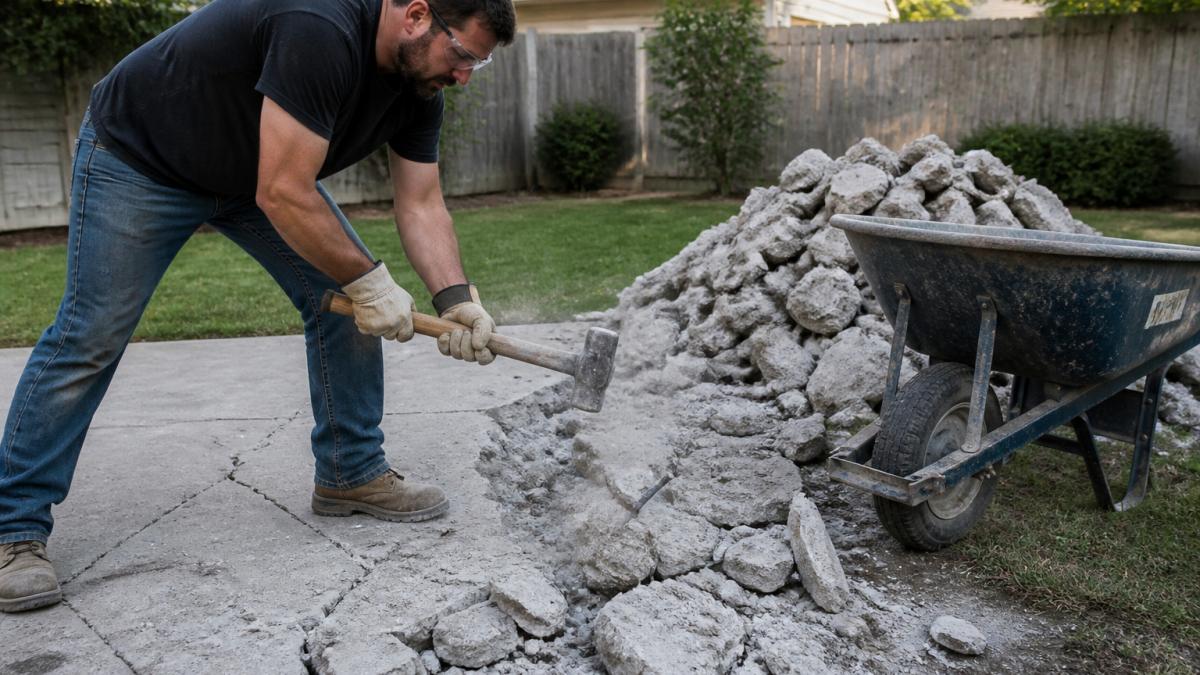
Breaking it down. A sledgehammer works for thin slabs and steps; a pry bar and a helper speed up lifting edges. For slabs thicker than a few inches, a concrete saw or a rented electric breaker saves hours. Break along existing cracks and lift at the edges rather than striking the center. Keep pieces to a size one person can lift and a machine can feed.
Removing attached materials. Pull rebar and wire mesh before loading. Cut or bend protruding rebar so it doesn't snag tarps or puncture tires. Scrape off paint, adhesive, and heavy soil where you can; recycling yards reject loads where contaminants will ruin the crusher output.
Safety first. Concrete dust contains silica, so wear a respirator and eye protection when breaking slabs. Lift with your legs, use a wheelbarrow for short moves, and never stack rubble above the sides of a trailer.
Loading and securing. This is where cheap disposal runs go wrong:
- Distribute weight over the trailer axle, not behind it. Too much tongue weight overloads the hitch; too little makes the trailer sway.
- Line the bed with a tarp before loading so small chips don't fall through gaps onto the road.
- Strap the load at two points minimum and check the straps after the first few miles.
- Keep the load below the trailer sides. A heap above the rails shifts and spills.
Transport checklist. Confirm the facility's hours and whether it accepts your piece size. Bring gloves for unloading. Drive the route once in your head: low clearance, tight turns, and steep driveways are harder with a loaded trailer. If the load exceeds your vehicle's rating, split it into trips or book a hauling crew instead.
Handling Contaminated Concrete and Washout
Contaminated concrete needs different handling than clean rubble. Concrete with rebar, paint, adhesive, asbestos, or heavy soil often can't go to a recycling yard and may require a licensed landfill. If your structure was built before the 1980s, have suspect material tested before you break it up.
Wet leftover concrete is its own problem. Never pour washout down a storm drain or onto bare soil. Use a washout spot, containment berm, plastic pools, or collapsible washout bags to capture the slurry, then let it cure and dispose of the hardened material as solid waste. Many sites now require a designated washout area for exactly this reason.
That's the part most people underestimate: a single bucket of washout dumped in the wrong place can trigger a cleanup obligation that costs far more than proper disposal.
Frequently Asked Questions
Can concrete go in a regular dumpster?
No, concrete cannot go in a regular dumpster. Concrete is extremely heavy and can damage the dumpster, the truck, or your driveway. Most waste haulers prohibit concrete in standard containers and require a separate heavy debris box or a dedicated disposal method. Always ask your hauler about weight limits and accepted materials before loading concrete.
Is concrete 100% recyclable?
Yes, concrete is fully recyclable. It can be crushed and reused as aggregate for new concrete, road base, or landscaping material. Recycling facilities accept clean concrete rubble, but pieces with rebar, plastic, or other attached materials may need separation first. Check with your local recycling facility for their specific acceptance rules.
How do I get rid of old concrete for free?
You can get rid of old concrete for free by listing it on online marketplaces, donating it to local landscaping projects, or taking it to a recycling facility that accepts clean concrete at no charge. Some municipalities also offer free drop-off days for construction debris. Always call ahead to confirm hours, size limits, and whether any fees apply.
How should I prepare concrete for disposal?
Break large slabs into manageable pieces, remove rebar and attached materials, and keep the load free of dirt and trash. Check the disposal site's size and weight limits before loading. For heavy loads, use a sturdy wheelbarrow or a disposal trailer, and wear gloves and eye protection. If you're hiring a hauler, ask about driveway protection and weight restrictions.
Concrete disposal gets complicated when loads are large, mixed, or on a tight timeline. Take Away Dump Services LLC simplifies it with driveway-friendly disposal trailers in 14 and 18 yard sizes, licensed and insured service, and material delivery for your DIY projects. We handle demolition debris, cleanouts, and remodeling waste so you don't have to make three trips to a recycling yard. Get started with Take Away Dump Services LLC and book a trailer that fits your project.