 How-to
Will a Dumpster Damage My Asphalt Driveway?
Last Updated: November 12, 2026
Quick Summary
Yes, a dumpster can damage an asphalt driveway, but most dumpster damage is preventable by spreading the load and keeping metal off the surface. Use thick plywood as a base layer, add rubber mats on top, and place the container on flat, solid ground away from edges and cracks.
- Use plywood sheets at least 3/4 inch thick, covering the full footprint plus a foot on each side.
- Rubber mats alone don't spread weight well, so use them over plywood for heavy loads.
- Avoid placing the dumpster near driveway edges, on slopes, or over existing cracks.
- Heavy debris like concrete and shingles can push a container toward its rated capacity fast.
- Photograph any cracks or depressions before the container leaves and report concerns the same day.
Table of Contents
- Will a Dumpster Damage My Driveway? The Honest Answer
- What to Put Under a Dumpster to Protect Asphalt
- Dumpster Placement on an Asphalt Driveway: Where It's Safe
- How Dumpster Weight and Rollers Put Pressure on Asphalt
- 20 Yard Dumpster Driveway Protection: Sizing Your Setup
- Step-by-Step: Preparing Your Driveway Before Delivery
- Delivery, Pickup, and What to Do If Damage Happens
- Book a Driveway-Friendly Dumpster Drop-Off
- Frequently Asked Questions
Will a Dumpster Damage My Driveway? The Honest Answer
Yes, a dumpster can damage an asphalt driveway, but only when weight, heat, and metal contact points work against you. At Take Away Dump Services LLC, we've seen that protecting asphalt from dumpster damage comes down to three things: what goes under the container, where it sits, and how it's delivered.
Here's the short version. Asphalt is flexible pavement. It softens in heat and cracks in cold. A loaded roll-off dumpster concentrates thousands of pounds onto a few contact points.
Below, we'll show you exactly how to set up protection, where to place the dumpster, and what to do if something goes wrong.
What to Put Under a Dumpster to Protect Asphalt
The best protection for an asphalt driveway is a rigid barrier that spreads weight and keeps metal off the surface. Plywood and wood boards are the go-to choice. Rubber mats and protective pads work well as a second layer or for lighter loads.
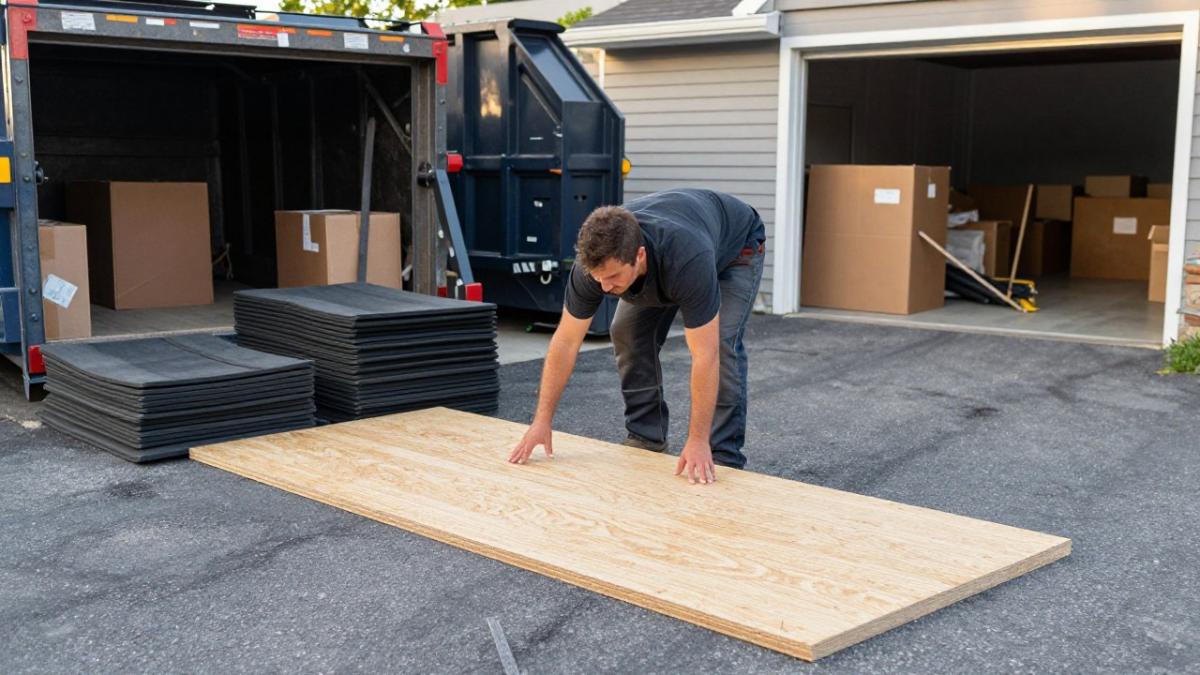
Think of it as a sandwich. Wood on the bottom spreads the load. Rubber on top absorbs shock and grip. Together they handle most residential jobs.
Plywood and Wood Boards: The Go-To Protective Layer
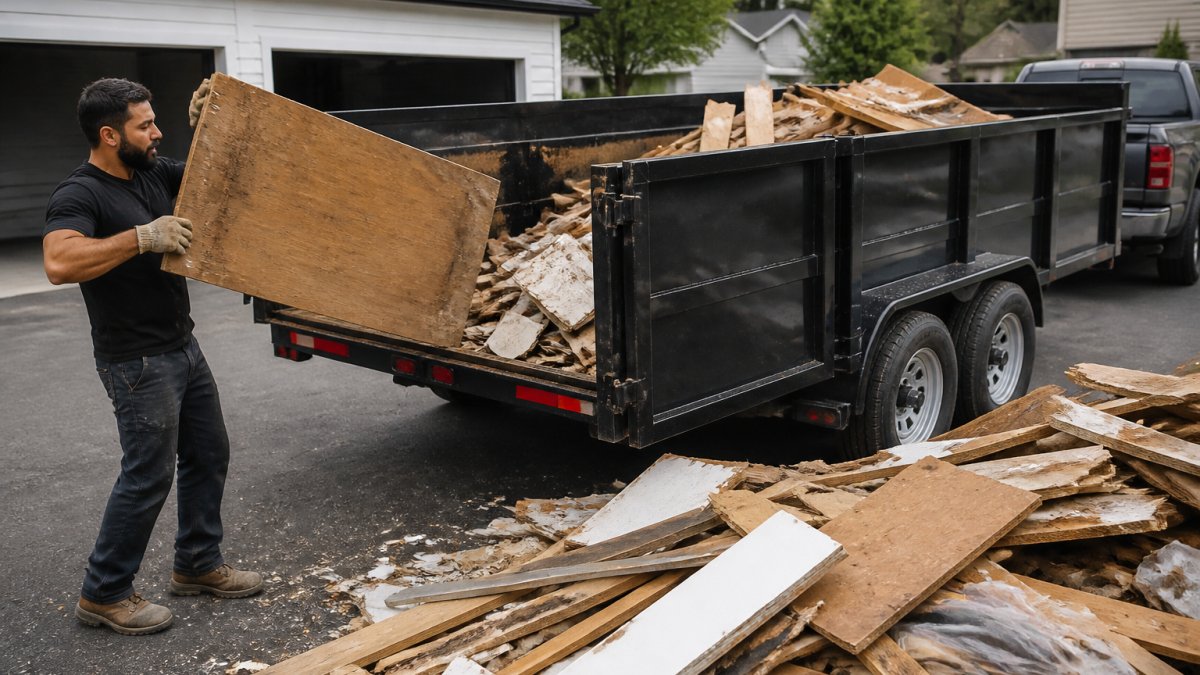
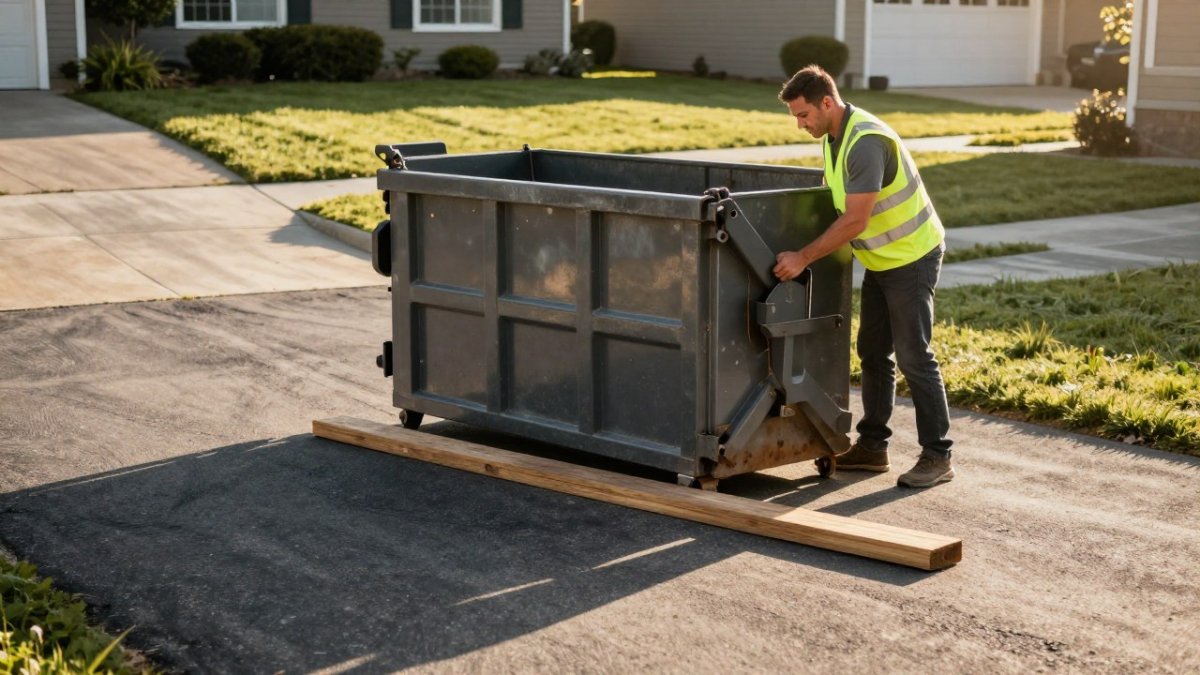
Plywood is a common choice because it spreads weight across a wide area. Use thick sheets, at least 3/4 inch, and lay them so the dumpster's rails and wheels rest fully on the wood.
A few practical rules we've picked up:
- Use full sheets, not scraps. Small pieces shift under load.
- Overlap the edges so the boards stay put.
- Cover the entire footprint plus a foot on each side.
- Tape or weight the corners so wind and delivery don't move them.
A common mistake is laying a single sheet under each corner. That leaves the middle unsupported and lets the container flex. Cover the whole footprint instead.
Rubber Mats and Protective Pads: When They Beat Wood
Rubber mats shine when you want grip and shock absorption. They stop metal rollers from scraping and reduce the chance of gouges. On hot days, rubber also keeps hot metal from sitting directly on soft asphalt.
Where rubber falls short: it doesn't spread weight as well as thick wood. For a heavy load, use rubber over plywood, not rubber alone.
Best for: light loads and short rentals, or as a top layer over wood. Skip if: you're loading heavy debris like concrete or shingles.
Dumpster Placement on an Asphalt Driveway: Where It's Safe
Safe placement means flat, solid ground away from edges and soft spots. Put the dumpster on the most stable part of the driveway, ideally over a base that isn't cracked or sinking. Keep it back from the garage door and clear of any slope.
Here's where to place it and where to avoid:
| Location | Safe? | Why |
|---|---|---|
| Flat, solid driveway center | Yes | Even weight, stable base |
| Near driveway edge | No | Edge can crack or crumble |
| On a slope | No | Shifting and uneven load |
| Over existing cracks | No | Cracks spread under weight |
| On soft or sun-softened asphalt | No | Surface can deform |
Placement matters as much as protection. A perfectly padded dumpster on a bad spot still causes problems.
How Dumpster Weight and Rollers Put Pressure on Asphalt
A roll-off dumpster does not rest its weight evenly across the driveway.
The math is straightforward even without exact figures. A 20 yard container loaded with heavy debris like shingles, concrete chunks, or dirt can weigh several tons.
Three variables drive the real pressure on your asphalt:
- Container size. A longer container spreads weight over more rail length, but it also puts more total load on the driveway and uses more of any weak spot. A 10 or 15 yard container concentrates less total weight than a 20 or 30 yard unit, even though the contact pattern is similar.
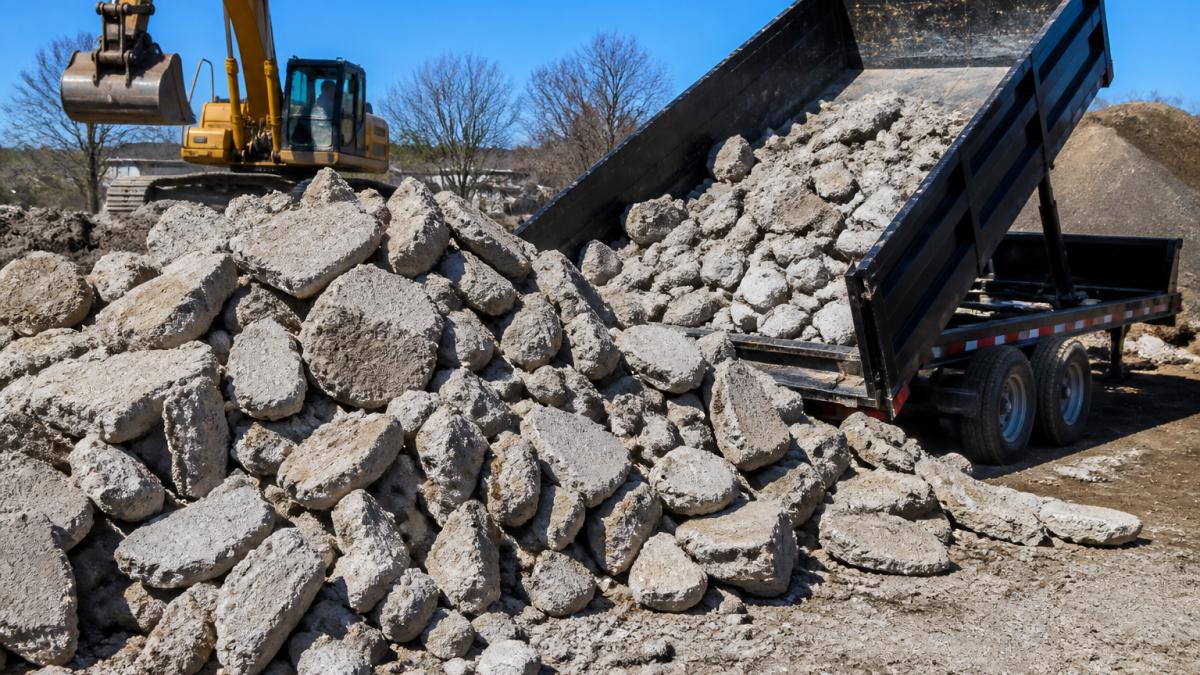
- Debris type and density. Clean-outs with furniture, cardboard, and light remodeling debris are relatively forgiving. Concrete, brick, shingles, dirt, and mixed demolition debris are dense and can push a container toward its rated capacity fast.
- Load distribution. Debris piled at one end shifts weight onto fewer contact points. An uneven load can put most of the container's weight on one rail or one roller, which is exactly the scenario that dents asphalt on a hot day.
Seasonal conditions change how the asphalt responds to that pressure:
- Summer heat: asphalt softens and loses stiffness, so heavy loads sink in faster and depressions form under rollers.
- Winter cold: asphalt becomes brittle, so impact from a dropped container or scraping rollers causes cracks rather than dents.
- Spring thaw: saturated subgrade weakens support under the pavement, so even moderate loads can crack the surface.
Watch out: loading a dumpster past its rated capacity does not just risk the driveway. It can also make pickup unsafe because the truck may not be able to lift and dump the container cleanly.
A common pattern is that homeowners underestimate how much a small volume of dense debris weighs. A container that looks half full of shingles or concrete can already be at or near its limit.
20 Yard Dumpster Driveway Protection: Sizing Your Setup
A 20 yard dumpster needs protection that covers its full footprint, not just the corners. These containers are long and heavy, so the rails run the entire length. Your boards or mats must span that whole run.
For a 20 yard setup, a typical approach includes:
- Thick plywood sheets covering the entire base plus a foot of margin
- A rubber layer on top for grip and shock absorption
- Boards laid flat on stable, level ground
- Clear placement instructions given to the provider before delivery
Size matters because a longer container puts more weight across more surface, but also more use on any weak spot. If your driveway has cracks or soft areas, position the container to avoid them entirely.
If your driveway can't safely hold a 20 yard container, ask about smaller options. Take Away Dump Services LLC offers disposal trailers in 14 and 18 yard sizes, which suit tighter driveways and smaller clean-outs.
Step-by-Step: Preparing Your Driveway Before Delivery
Preparation is where most people skip steps, and it's where damage gets prevented. Follow this checklist before the truck arrives.
Total Time: about 30-60 minutes Difficulty: Beginner
What You'll Need:
- Thick plywood sheets or wood boards
- Rubber mats or protective pads
- Tape or weights for the corners
- A broom and a quick eye for cracks
Step 1: Inspect the driveway. Walk the surface and note cracks, soft spots, and low areas.
Step 4: Add the top layer. Place rubber mats over the wood for grip and shock absorption.
Step 5: Secure the edges. Tape or weight the corners so nothing shifts during delivery.
Step 6: Share placement instructions. Tell the provider exactly where you want the container and point out any spots to avoid.
Expected Result: a stable, padded base that spreads weight and keeps metal off your asphalt.
Delivery, Pickup, and What to Do If Damage Happens
Delivery and pickup are the two moments when damage most often happens. The truck backs in, sets the container down, and later drags it back up. Metal rollers and wheels scrape and press during both steps, and the driver is working with limited visibility from the cab.
Before delivery:
- Walk the driveway and confirm the protection boards or mats are flat, overlapped, and still covering the full footprint plus a foot of margin on each side.
- Clear the path so the truck has room to back in without clipping a garage door, fence, or parked vehicle.
- Mark any spots you want the container to avoid, such as existing cracks, soft areas, or the edge of the pavement.
- Confirm the placement spot with the provider in writing if possible, including any instructions about setting the container down gently rather than dropping it.
During delivery:
- Meet the driver if you can and point out the placement spot and the areas to avoid.
- Watch the container as it is set down and note whether the rails and rollers land fully on the protection layer.
- Ask the driver to set the container down gently, not drop it, especially in cold weather when asphalt is brittle.
Before pickup:
- Confirm the boards or mats are still in place and have not shifted under the load.
- Make sure the path is clear for the truck to back in and pull the container up.
- Note the condition of the driveway before the container leaves, since proving what happened after pickup is much harder.
If damage happens:
Document it right away. Take photos of cracks, gouges, or depressions before the container leaves, and include a wide shot that shows the container and the damaged area together. Note the date and time.
Watch out: waiting until the container is gone to report damage is the most common mistake. Once it is picked up, proving what happened gets much harder, and the provider has less ability to inspect the site.
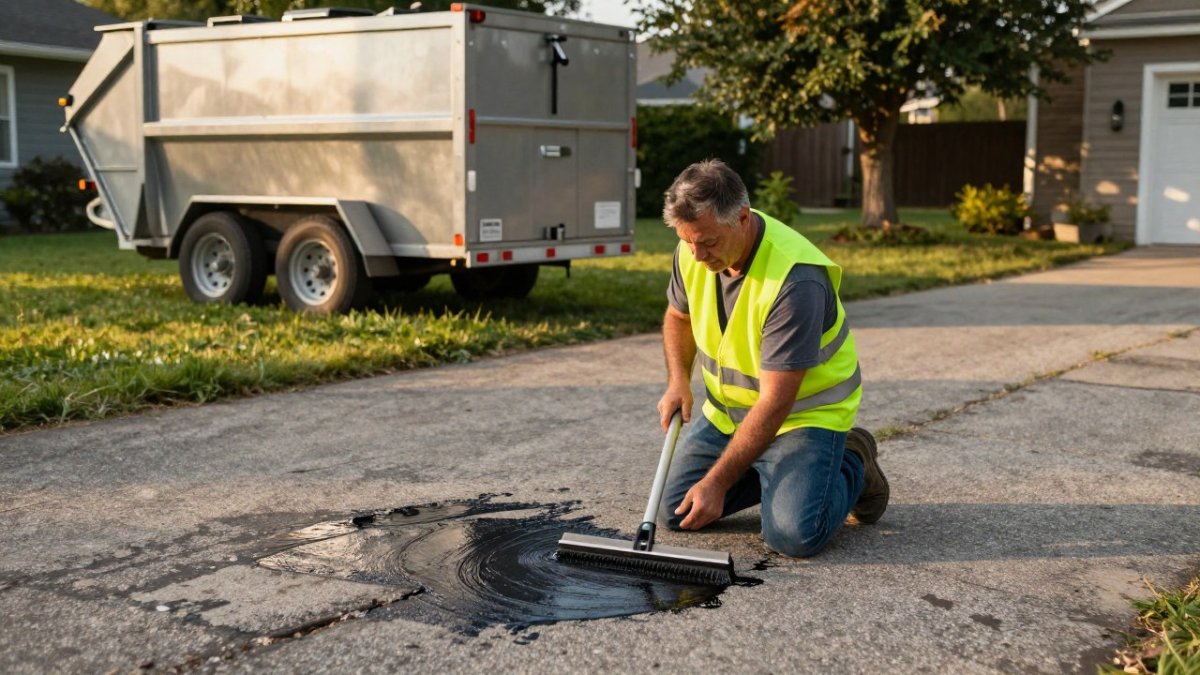
A common pattern is that minor surface scrapes are cosmetic and can be sealed, while deeper cracks or depressions may need an asphalt repair assessment.
Book a Driveway-Friendly Dumpster Drop-Off
Protecting asphalt from dumpster damage isn't complicated. Pad the base, place the container on solid ground, and communicate clearly with your provider. Do those three things, and most driveways come through a rental without a scratch.
At Take Away Dump Services LLC, driveway-friendly drop-off is a core focus. Take Away Dump Services LLC is licensed and insured, and offers disposal trailers in 14 and 18 yard sizes to fit tighter driveways and smaller jobs.
Get started with Take Away Dump Services LLC and keep your asphalt protected from delivery to pickup.
Frequently Asked Questions
Will a dumpster crack my asphalt driveway?
It can, but only under specific conditions. A dumpster is most likely to crack asphalt when the pavement is already weakened by cracks or age, when the ground beneath is soft from rain or thaw, or when heavy debris concentrates weight on a small contact point. Fresh asphalt is especially vulnerable in its first six to twelve months. Using plywood or rubber mats under the container and keeping heavy loads toward the center of the driveway greatly reduces dumpster damage risk.
What is the best thing to put under a dumpster on asphalt?
Plywood or thick wood boards are the most common choice because they spread weight across a wide area and keep metal rollers off the pavement. Rubber mats and protective pads work well as a second layer or for lighter loads. For a 20 yard dumpster driveway protection setup, overlap several sheets of three-quarter-inch plywood so no roller touches bare asphalt, and extend the boards a few inches past each corner.
Who is responsible if a dumpster damages my driveway?
Responsibility depends on the agreement and the cause. If the provider placed the container against your instructions or ignored a known hazard, they may be liable. If you approved the placement on weak or damaged asphalt, the cost often falls to you. Before delivery, walk the driveway with the driver, note existing cracks in writing or photos, and confirm who provides protective materials. Ask about insurance coverage up front so there are no surprises.
Does hot weather make asphalt more likely to be damaged by a dumpster?
Yes. Asphalt softens as surface temperatures rise, so a heavy container sitting in direct summer sun is more likely to leave depressions or roller marks. The same applies to new asphalt that has not fully cured. Schedule delivery for early morning when possible, keep the load within the container's rated capacity, and use boards or mats to spread the weight. In winter, frozen ground and road salt create different risks, so inspect the surface before every drop-off.