 Ultimate guide
The Homeowner's Guide to Cleaning Out a Garage
Last Updated: November 15, 2026
Quick Summary
To clean out garage space, sort every item into keep, donate, recycle, and discard piles, then clean the empty space from top to bottom. Set up labeled zones and clear the floor first, and book your haul before the sorting weekend so the discard pile leaves quickly.
- Label four sorting zones: keep, donate, recycle, and discard, with the discard pile closest to the door.
- A full two-car garage cleanout can take a single weekend to several, depending on accumulation.
- The short-session plan runs 15 to 30 minutes a day over two to three weeks.
- If you have not used an item in two years and it costs little to replace, it goes.
- Paint, motor oil, antifreeze, propane tanks, pesticides, pool chemicals, and old batteries never go in the regular trash.
Table of Contents
- How to Clean Out a Garage Fast: A Step-by-Step Plan
- Garage Cleaning Tips for the Overwhelmed: Start Small, Finish Strong
- Decluttering and Sorting: The Keep, Donate, Recycle, and Discard Piles
- Disposal Logistics and Cost Planning: Junk Removal, Recycling, and Hazardous Waste
- Top-to-Bottom Cleaning: Walls, Shelves, Floors, and Stains
- Garage Cleanout and Organization: Build Storage Zones That Last
- Garage Cleanout Services Pricing: What to Expect and How to Budget
- Book Your Driveway-Friendly Garage Cleanout
- Frequently Asked Questions
How to Clean Out a Garage Fast: A Step-by-Step Plan
To clean out garage space, you sort every item into keep, donate, recycle, and discard piles, then clean the empty space from top to bottom.
Here is the sequence that works: set up zones, clear the floor, sort, haul, clean, then rebuild. A two-car garage can take anywhere from a single weekend to several, depending on how much has accumulated.
Set Up Your Sorting Zones Before You Touch Anything
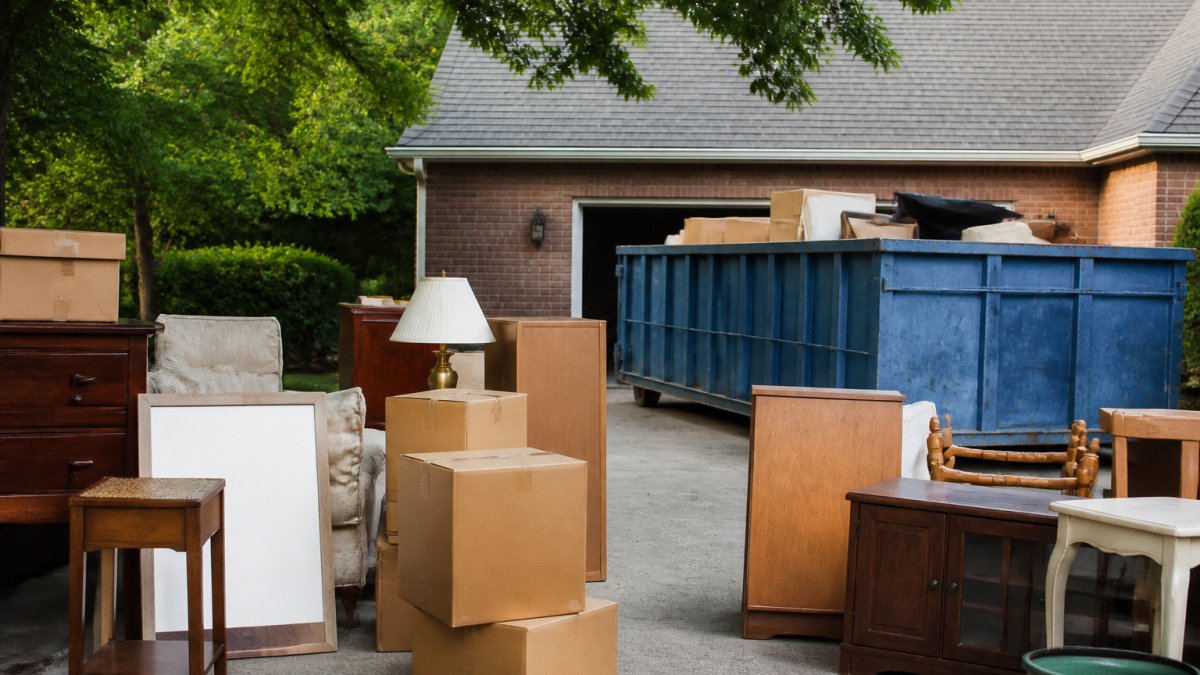
Label four areas outside or at the garage mouth: keep, donate, recycle, discard. Use tape on the driveway or cardboard signs. This one step prevents the classic mistake of carrying an item around for ten minutes deciding where it goes.
Keep the discard pile closest to the door. That pile leaves first, and it should be the easiest to move.
Work in Sections and Clear the Floor First
Clear the floor before you open a single cabinet. Floor space gives you room to sort, and it makes the garage feel winnable within the first hour. Pick one wall, work left to right, and resist the urge to jump around.
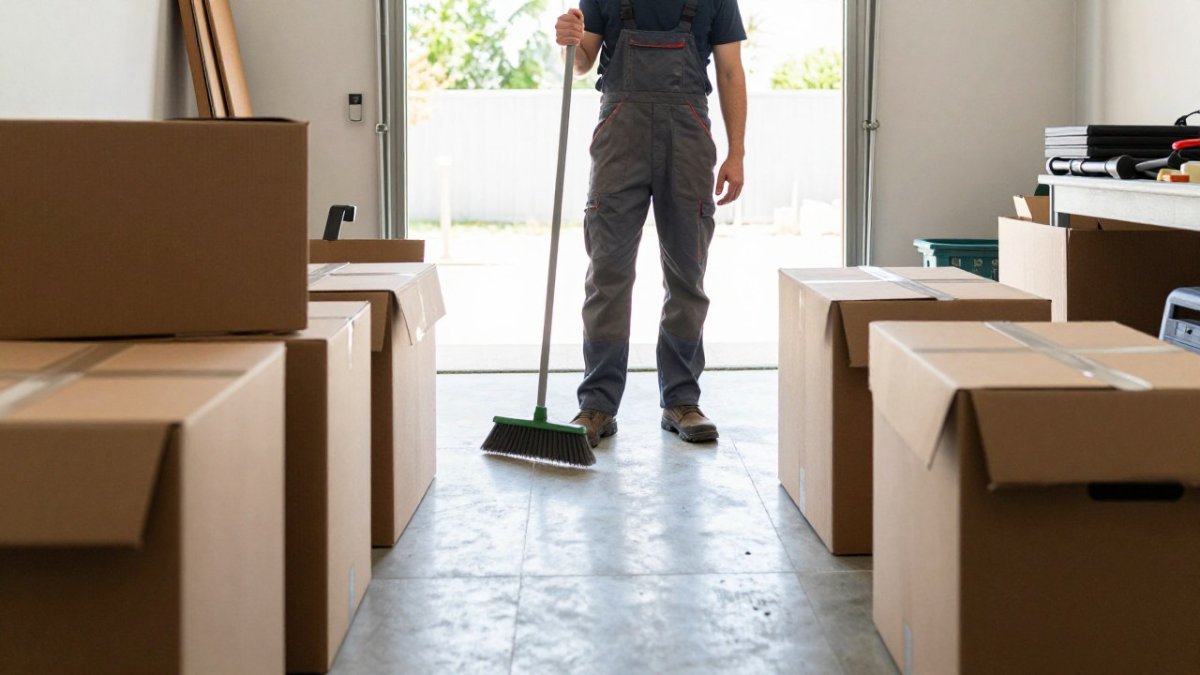
Garage Cleaning Tips for the Overwhelmed: Start Small, Finish Strong
Overwhelm comes from treating the garage as one giant task instead of twenty small ones. A common mistake is standing in the doorway surveying the whole mess, then closing the door again. The fix is not motivation; it is a realistic time plan with checkpoints, so you always know what "done for today" looks like.
Pick a Plan That Matches Your Real Schedule
A full two-car garage cleanout usually fits one of three shapes. Choose one before you start, because switching plans mid-project is what turns a weekend into a month.
- Short-session plan (15-30 minutes a day, 2-3 weeks). Best for people with tight schedules or low stamina. Commit to one shelf, one bin, or one wall segment per session. The rule that keeps it moving: never end a session with a pile in the walkway. Sort what you touched, then stop.
- Weekend plan (two full days). Day one is setup, floor clearing, and sorting. Day two is hauling and cleaning. This only works if the haul is already booked before day one, because a discard pile that sits in the driveway for a week undoes the momentum.
- Multi-day plan (three to four half-days). The most forgiving option for a packed garage. Assign day one to the back wall, day two to shelving and cabinets, day three to the floor and cleaning, and day four to rebuilding zones.
Set Checkpoints So Progress Is Visible
A checkpoint is a physical state you can see, not a feeling. Useful checkpoints for a garage:
- The floor is clear enough to walk a straight line from the door to the back wall.
- Every item you touched is in one of the four piles, with nothing left "to decide later" in the middle of the room.
- The discard pile is staged at the door and scheduled for pickup.
If you hit a checkpoint early, stop for the day. Finishing a session ahead of plan is what makes the next session easier to start.
Tactics That Actually Reduce Friction
- Start with the easiest corner so you see progress fast, and save the emotionally loaded boxes for a session when you have more time.
- Put on music or a podcast and treat it as a workout, with a defined start and end time.
- Recruit one helper for the heavy lifting and hauling, and give that person a single job (carrying, not deciding) so you are not both stalled over the same box.
Watch out: do not use "I'll decide later" as a sorting category. A maybe box works only if it has a hard date and a rule that unopened means it goes.
Decluttering and Sorting: The Keep, Donate, Recycle, and Discard Piles
Sorting is where most attempts to clean out garage clutter stall. The rule that keeps you moving: if you have not used an item in two years and it costs little to replace, it goes. Sentiment gets a small box, not a shelf.
How to Decide What to Keep, Donate, or Toss
Run each item through three questions: Did I use it in the past year? Would I buy it again today? Does it work? A "no" to any of these moves it out of the keep pile.
| Pile | What Goes There | Where It Ends Up |
|---|---|---|
| Keep | Used in the past year, works, hard to replace | Back on labeled shelves |
| Donate | Good condition, unused, still useful | Local charity or donation center |
| Recycle | Metal, cardboard, clean plastics | Curbside or recycling center |
| Discard | Broken, expired, beyond repair | Junk removal or transfer station |
Disposal Logistics and Cost Planning: Junk Removal, Recycling, and Hazardous Waste
Disposal is the step that sinks most DIY cleanouts, because the discard pile has to physically leave. Plan the haul before you build the pile, and match the method to the volume and the material.
Match the Disposal Method to the Load
- Curbside and municipal bulk collection. Cheapest option for small loads and single bulky items, but rules vary by hauler and municipality: many limit the number of bags or items per pickup, exclude tires, appliances, and construction debris, and require items at the curb by a set time. Check your hauler's accepted-items list before you count on it.
- Transfer station or landfill trip. Good for a truckload you can haul yourself. Expect to pay a per-load or per-ton tipping fee, and confirm hours, proof-of-residency requirements, and whether the site separates recyclables.
- Donation pickup. Best for furniture, tools, and household goods in usable condition. Many charities schedule pickups weeks out and refuse items with tears, missing parts, or safety issues, so book early and confirm the accepted list.
A practical sequence: book the haul first, sort second, load third. Booking before the sorting weekend means the pile does not sit in the driveway for a week, and it forces you to commit to a volume instead of endlessly adding to the pile.
Cost Factors to Budget For
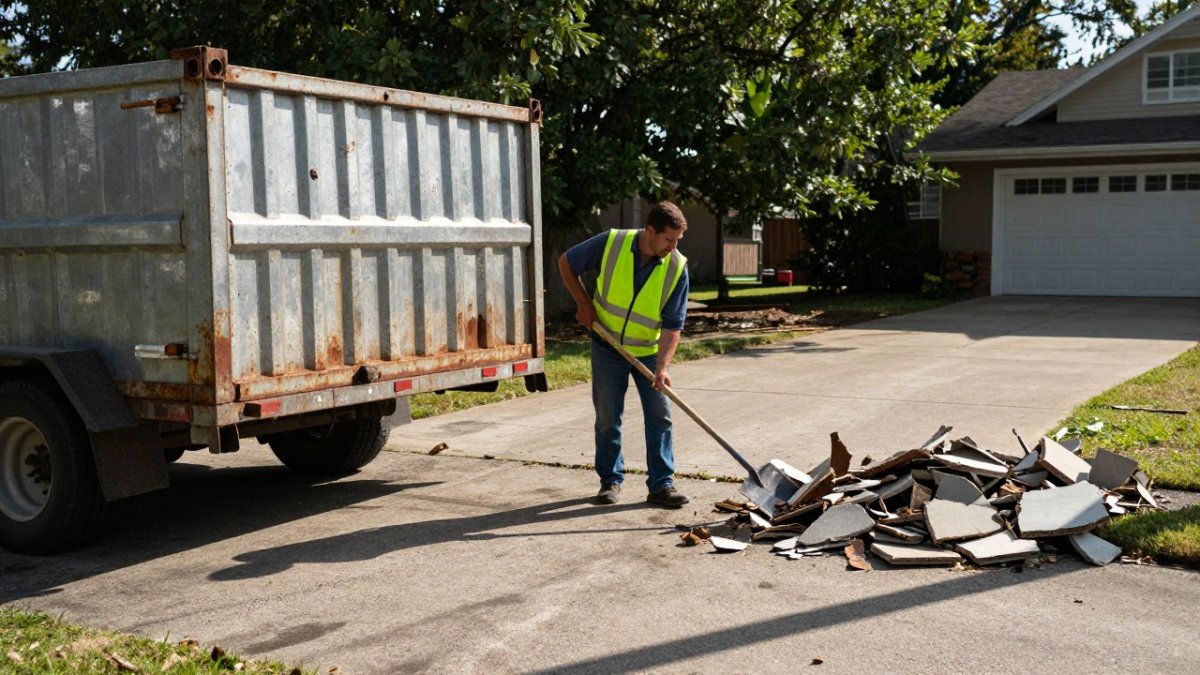
Cleanout costs are generally quoted after reviewing the pile, because three cost drivers usually matter: labor (how many people and hours), disposal (tipping fees, weight limits, and any special handling), and access (distance from the truck to the pile, stairs, gates, and whether the container can sit on the driveway without blocking it). Ask for an all-in quote that names every fee up front, including overage charges if the load exceeds the quoted weight or volume, and confirm the provider is licensed and insured before anything is loaded.
Hazardous Materials and Safe Disposal
Paint, motor oil, antifreeze, propane tanks, pesticides, pool chemicals, and old batteries never go in the regular trash. Many communities run household hazardous waste collection days or permanent drop-off sites, and the EPA household hazardous waste guidance explains why these items need separate handling.
Watch out: never pour paint or oil down a drain or storm sewer, and never mix chemicals to "use them up." Keep hazardous items in their original labeled containers, and transport them upright and secured so they do not tip in the vehicle.
Protect Yourself While You Haul
Disposal day is a physical job, and the hazards are predictable. Wear gloves for sharp metal, broken glass, and unknown liquids; eye protection when you are moving anything that could snap or spray; and a mask when you are disturbing years of dust, insulation, or rodent droppings. Ventilate the space by opening the garage door, lift with your legs and keep loads close to your body, and get a second person for anything heavy or awkward.
Top-to-Bottom Cleaning: Walls, Shelves, Floors, and Stains
Clean the empty garage from the ceiling down, because dust falls. Start with spiderwebs in corners, then dust walls, shelves, storage containers, and baseboards. A shop vacuum with a brush attachment handles most of it faster than a broom.
For floors, sweep first, then deal with stains. Oil and grease respond to an absorbent material like cat litter before scrubbing. A vinegar and water solution handles general grime on concrete.
Garage Cleanout and Organization: Build Storage Zones That Last
Organization fails when everything goes back on the same shelf it came from. Build zones instead: a tool zone, a lawn and garden zone, a household overflow zone, and a seasonal zone. Keep the most-used items at waist height and the once-a-year items up high.
Clear plastic bins beat cardboard, because you can see what is inside and moisture will not ruin them. Label each bin on the lid and the side.
Garage Cleanout Services Pricing: What to Expect and How to Budget
Garage cleanout service pricing depends on volume, access, and what needs to be hauled, so a current quote is the best way to get an accurate number. Budget for three things: labor, disposal, and any special handling for hazardous or bulky items.
If you are weighing whether to hire help, 7 reasons to choose professional debris removal covers when professional help may be worth considering.
Book Your Driveway-Friendly Garage Cleanout
The hardest part of a garage cleanout is not the sorting. It is getting the discard pile off your property without cracking your driveway or waiting a week for a pickup.
Before you book, read will a dumpster damage my asphalt driveway to learn more about driveway protection.
A cluttered garage does not clear itself, and the pile only grows while you wait.
Frequently Asked Questions
Where should I start when cleaning out a garage?
Start by clearing the floor, not the shelves. Pick one section, such as the area just inside the door, and work outward. Set up four labeled zones for keep, donate, recycle, and discard before you move anything. This gives you a visible win early and makes the rest of the garage feel less overwhelming. If you can, move the car out and use the driveway as temporary sorting space.
How do I clean out a garage when I feel overwhelmed?
Break the job into 15-minute sessions and focus on one small area at a time. Put on a timer, sort only what you can see in that zone, and stop when it rings. Over a week, those short sessions add up to a cleared garage. For larger jobs, a professional cleanout service may be able to handle the heavy lifting and disposal.
How can I clean out a garage quickly?
Recruit help, schedule a disposal trailer or dumpster for the same weekend, and sort with a strict rule: if you have not used it in a year, it goes. Work top to bottom and clear the floor first so you have room to move. Have donation bags and a discard pile ready before you start. Booking disposal in advance keeps the momentum going once the piles are built.
What should I throw away when cleaning out a garage?
Toss dried paint, old chemicals, broken tools, torn tarps, expired automotive fluids, and anything moldy or water-damaged. Check local rules for hazardous waste before putting those items in the trash. Donate usable tools, bikes, and household items. Recycle cardboard, metal, and clean plastics. When in doubt, ask whether you would pay to move it to a new house; if not, it is a discard candidate.
How do I dispose of bulky items and garage junk?
Bulky items like old furniture, appliances, and mattresses often need a dedicated haul-away service because curbside pickup will not take them. Separate hazardous materials such as paint, propane tanks, and motor oil for a local household hazardous waste drop-off. For large volumes, a roll-off or disposal trailer is the simplest route. Confirm the provider is licensed and insured and that the trailer is driveway-friendly before booking.
How long does it take to clean out a garage?
A one-car garage with average clutter takes most homeowners one to two weekends of focused work. Heavily packed two-car garages or estates can take longer, especially if hazardous materials or large furniture are involved. Booking disposal in advance and recruiting a helper can cut the timeline significantly. Plan for a sorting day, a cleaning day, and an organization day to keep the pace realistic.
How can I keep my garage clean after a cleanout?
Set up storage zones: a tool wall, labeled bins for seasonal items, and a clear floor lane for the car. Schedule a 10-minute weekly reset and a seasonal deep clean each spring and fall. Use the one-in, one-out rule for new purchases. A repeatable maintenance routine is the difference between a clean garage and a recluttered one within a year.