 blog
Crushed Concrete Delivery for Landscaping: 2026 Guide
Last Updated: October 23, 2026
Quick Summary
Crushed concrete delivery brings recycled, graded aggregate straight to your site for patio bases, paths, and driveway rebuilds, usually at a lower cost than quarried stone. Order the right gradation, calculate cubic yards first, and confirm the full delivered cost in writing before booking.
- 1.5-inch minus with fines is the gradation most driveway and patio base projects call for.
- Calculate volume as length times width times depth divided by 27, then add 10 percent for compaction loss.
- Compare quotes by converting each to a delivered cost per cubic yard, not per ton.
- A loaded tandem-axle dump truck needs a clear gate opening of at least 10 to 12 feet.
- Keep crushed concrete away from acid-loving plantings and vegetable beds because it can raise soil pH.
Table of Contents
- Why Crushed Concrete Delivery for Landscaping Makes Sense
- Crushed Concrete Sizes and Gradations for Landscaping
- Landscaping and Construction Uses for Recycled Concrete
- How Much Crushed Concrete Do I Need?
- Crushed Concrete Price per Ton: What Affects Your Quote
- Crushed Concrete vs Gravel: Which Base Material Wins?
- Building a Crushed Concrete Driveway That Lasts
- Ordering, Delivery, and Site Preparation
- Frequently Asked Questions
Why Crushed Concrete Delivery for Landscaping Makes Sense
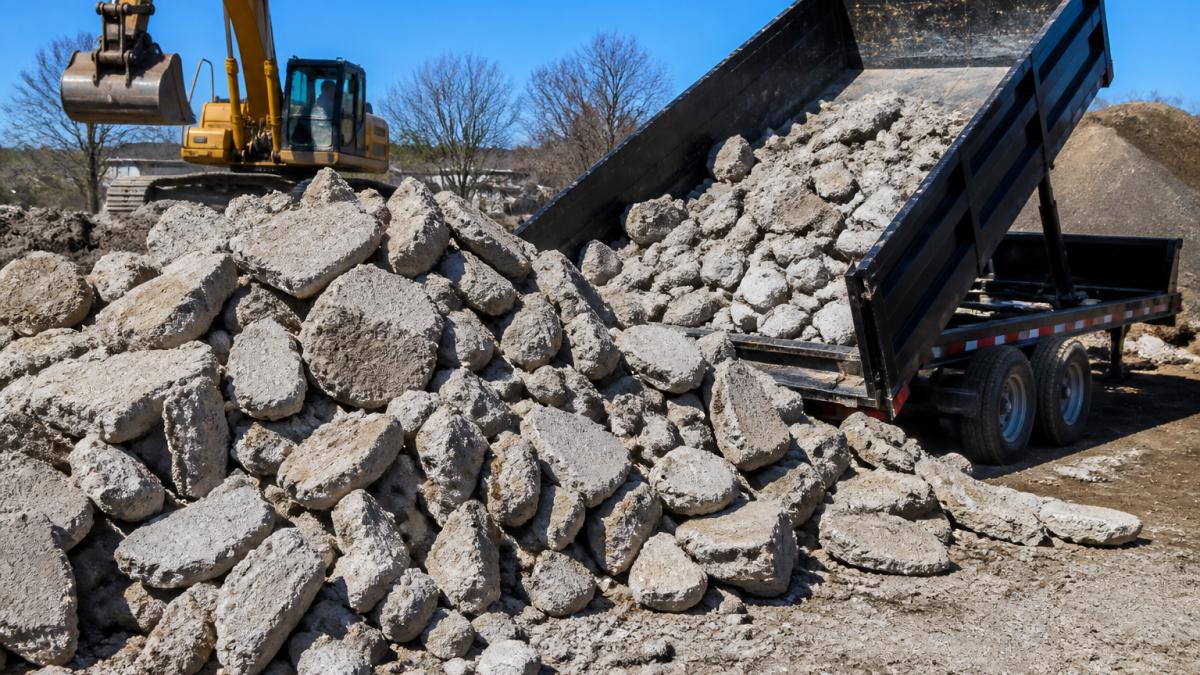
Crushed concrete is recycled aggregate made by breaking up demolished concrete slabs, driveways, and sidewalks into graded pieces.
We run material deliveries for DIY projects across the downriver area, and the pattern is consistent. Recycled concrete keeps demolition debris out of landfills, which aligns with what the U.S. Environmental Protection Agency reports on construction and demolition debris as one of the largest waste streams in the country.
The material compacts hard, drains reasonably well when graded properly, and costs less than quarried stone in most cases. That combination is why landscapers specify it for base layers far more often than homeowners expect.
Crushed Concrete Sizes and Gradations for Landscaping
Gradation determines what a load of crushed concrete can actually do. Order the wrong size and you get a surface that never locks up, or a base that swallows three times the material you budgeted for.
Common Gradations: 57 Stone, 89 Stone, and 1.5-Inch Minus
57 stone is a washed, open-graded aggregate roughly 3/4 to 1 inch across with no fines. It drains fast and works well behind retaining walls, around drain tile, and as a free-draining sub-base.
89 stone runs smaller, generally 3/8 to 3/4 inch, and is the usual pick for walkway tops and tight-access areas where larger stone is awkward underfoot.
1.5-inch minus mixes stone up to 1.5 inches with concrete fines and dust. That dust is the point: when you water and compact it, the fines bind the stone into a firm, near-solid layer. This is the gradation most driveway and road base projects call for.
| Gradation | Typical Size | Fines Included | Best For |
|---|---|---|---|
| 57 stone | 3/4 to 1 inch | No | Drainage, retaining walls, sub-base |
| 89 stone | 3/8 to 3/4 inch | No | Walkways, tight access, decorative top |
| 1.5-inch minus | Up to 1.5 inches | Yes | Driveways, road base, patio base |
| 304 aggregate | Mixed with fines | Yes | Structural base, heavy compaction |
Ask what you are getting before the truck rolls.
Landscaping and Construction Uses for Recycled Concrete
Recycled concrete earns its place on a job site because it does structural work at a landscaping price. The uses we see most:
- Driveway and parking base over geotextile fabric, compacted in lifts
- Patio and shed sub-base under pavers or a concrete pour
- Utility and garden paths where a firm, weed-resistant surface matters
One caution worth stating plainly: keep crushed concrete away from acid-loving plantings and from areas where you plan to grow vegetables. Fresh material can raise soil pH around the edges of a bed. Use it as a base layer, cap it with topsoil, and the issue stays where it belongs.
How Much Crushed Concrete Do I Need?
Figure the volume in cubic yards first, then convert to tons using the supplier's number. Skipping the conversion step is the single most common ordering mistake we see.
Calculating Cubic Yards and Tons
The formula is length × width × depth in feet, divided by 27. That gives cubic yards.
For a 20-foot by 24-foot driveway at 6 inches deep: 20 × 24 × 0.5 = 240 cubic feet. Divide by 27 and you need about 8.9 cubic yards.
Crushed concrete generally weighs somewhere in the neighborhood of 1.4 to 1.6 tons per cubic yard depending on gradation and moisture, but that figure varies by supplier and by how wet the stockpile is. Confirm the conversion with whoever loads your truck rather than trusting a rule of thumb. Then add 10 percent for compaction loss and grade variation.
Crushed Concrete Price per Ton: What Affects Your Quote
Most suppliers quote crushed concrete two ways: a per-ton material price and a separate delivery charge. The number that matters is the installed cost, material plus hauling plus any minimum-load penalty plus the labor or equipment to place it. Comparing only the per-ton figure is how homeowners end up surprised at the invoice.
Breaking Down the Installed Cost
A delivered load of crushed concrete typically breaks into four line items:
- Material: priced per ton, and screened or washed gradations cost more than raw crush. A full load prices better per ton than a partial load.
- Delivery: charged by mileage and time, often with a flat minimum. A short run on a full truck is the cheapest per ton; a long run on a partial load is the most expensive.
- Minimum-load fee: most suppliers set a minimum order, and a partial load below that threshold carries a surcharge that can erase the savings of ordering small.
Ask for a written quote that lists each line separately. A quote that says only "$X per ton delivered" hides the delivery fee, the minimum, and whether placement is included.
What Moves the Per-Ton Number
- Gradation: 1.5-inch minus with fines is usually the best value for base work; washed 57 and 89 stone cost more because of the extra screening and washing.
- Volume: full loads beat partial loads per ton, and the minimum-order threshold is where small projects lose the savings.
- Distance: hauling is billed by time and mileage, so the delivery fee scales with the run, not the load size.
Comparing Quotes Accurately
To compare two quotes fairly, convert both to a delivered cost per cubic yard: take the total invoice (material + delivery + fees) and divide by the cubic yards you are receiving. Then confirm three things in writing: the gradation spec, the delivery window, and whether the driver will place the load where you need it. A lower per-ton number with a minimum-load surcharge and a curb-drop-only policy is often the more expensive option once the material is on the ground.
For current pricing on crushed concrete delivery, contact us directly with your project dimensions and access details and we will quote the full delivered cost.
Crushed Concrete vs Gravel: Which Base Material Wins?
Crushed concrete wins on cost and on compaction; gravel wins on uniformity and appearance. That is the honest short version.
The angular, rough faces of crushed concrete interlock under a plate compactor, which is why it holds up under vehicle traffic as a base layer.
For a driveway base, a patio sub-base, or a shed pad, crushed concrete is usually the better value.
Building a Crushed Concrete Driveway That Lasts
A crushed concrete driveway lasts when the subgrade is prepared and the material is compacted in lifts, not dumped and spread in one pass. Most failures trace back to skipping one of those two steps.
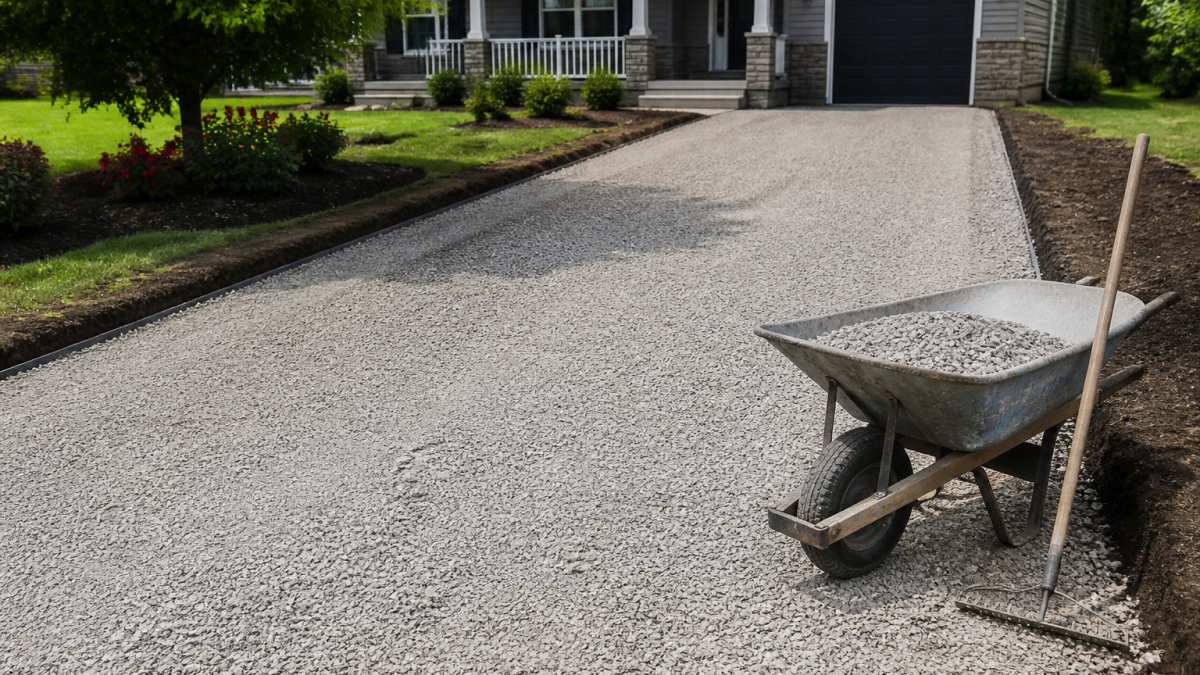
Installation and Compaction Tips
- Strip topsoil and organics from the full footprint, then grade and compact the subgrade.
- Lay geotextile fabric to stop fines from migrating into soft soil.
- Spread 1.5-inch minus in lifts of 4 to 6 inches, never one thick pass.
Compaction is where DIY installs go wrong. A hand tamper will not do it on a driveway. Rent a plate compactor, run it in overlapping passes, and check that the surface rings firm underfoot before you call it done.
Ordering, Delivery, and Site Preparation
Delivery logistics decide whether a load is a bargain or a headache. Trucks need room to turn, a clear path, and a spot to dump where the pile will not block the rest of the project. The difference between a smooth drop and a failed delivery is usually settled before the truck ever leaves the yard.
Truck Access and Clearance
A loaded tandem-axle dump truck is roughly 8 feet wide and 24 to 28 feet long, and it needs a turning radius that surprises most homeowners. Before you book, walk the route and check:
- Gate width: a clear opening of at least 10 to 12 feet gives the driver margin; narrower gates may require a smaller truck or a curb drop.
- Overhead clearance: low branches, power lines, and garage overhangs can stop a raised bed. Measure the lowest obstruction along the path.
- Ground bearing: a loaded truck weighs tens of thousands of pounds. Soft lawns, fresh asphalt, and thin concrete aprons can rut or crack under the axle load.
If any of these fail, say so when you book. A supplier who knows the access limits can send the right truck or plan a curb drop instead of arriving and turning around.
Preparing the Drop Zone
Mark the dump spot with a stake or cone and clear it of vehicles, tools, and anything the pile will bury. Think about where the material needs to go next: a pile at the far end of the driveway means wheelbarrowing every yard, while a pile near the work area saves hours. Keep the pile off the finished surface and away from drains, and leave room for the truck to pull forward after the bed raises.
Unloading and Placement
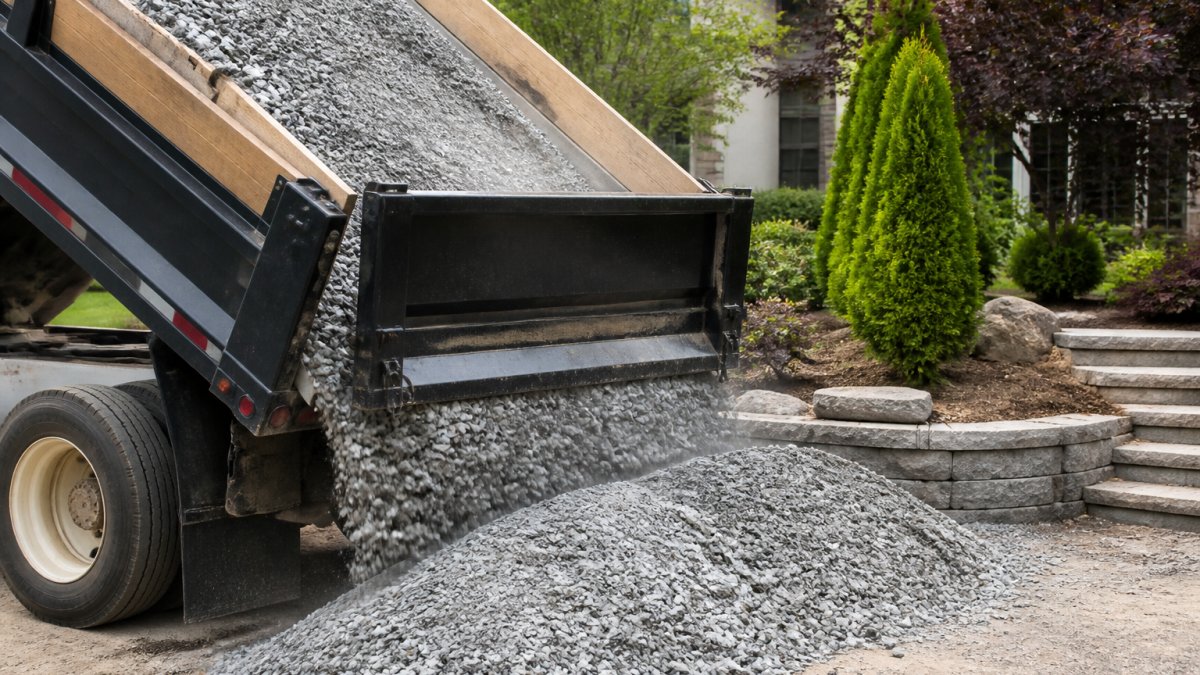
Most deliveries are a straight dump: the bed raises and the load slides out in one pile. Tailgating, where the driver spreads the material as the truck moves forward, is faster for long driveways but requires a clear, straight run and a driver willing to do it. Confirm placement policy when you book, because it is the line item most often assumed and least often included.
Minimums, Radius, and Scheduling
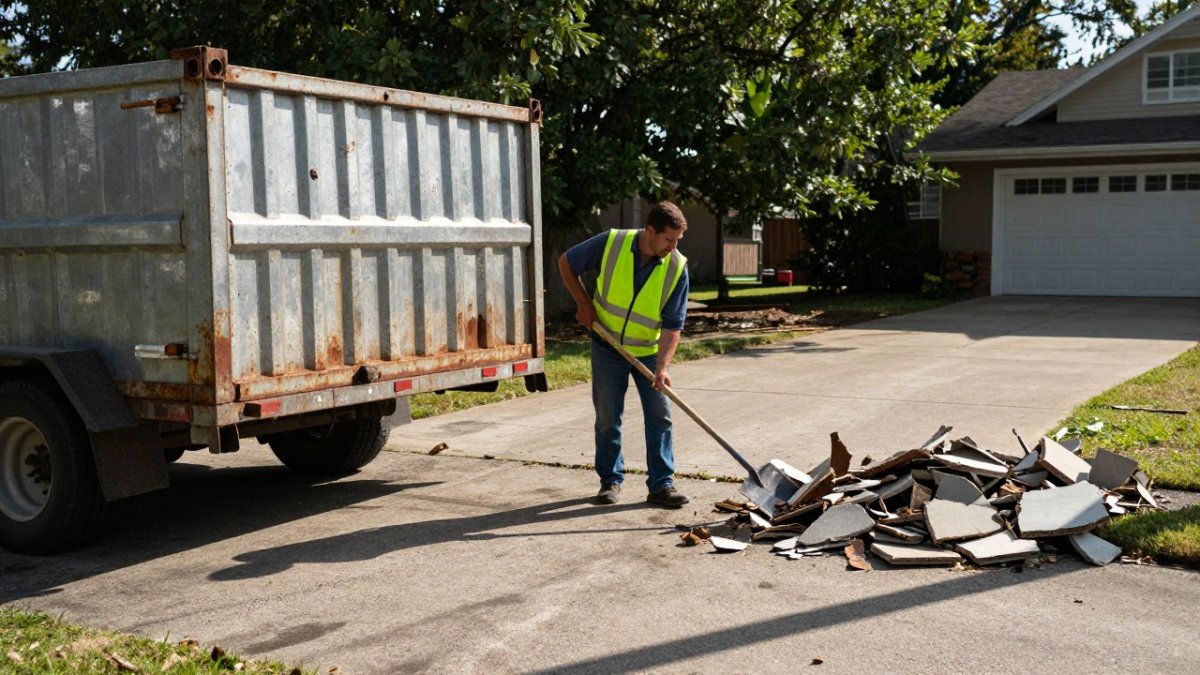
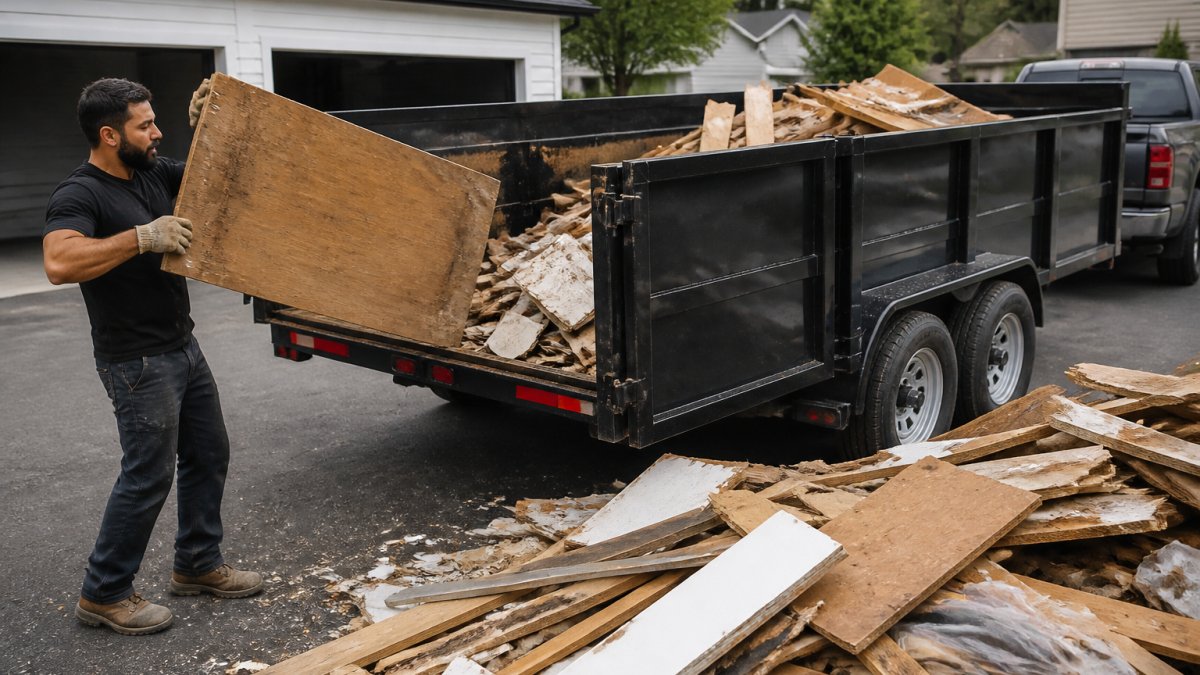
Most suppliers set a minimum order and a delivery radius, and a full load prices better than a partial. Ask about both up front, along with the delivery window and whether the driver will call ahead. For a project that also involves hauling debris away, we handle disposal trailers in 14 and 18 yard sizes alongside material delivery, so one call covers both directions.
The best quote is not the lowest per-ton number. Compare material cost, delivery fee, minimum order, access limits, and whether the supplier will place the load where you actually need it.
Frequently Asked Questions
How much does a truckload of crushed concrete cost?
A full truckload of crushed concrete typically ranges from 20 to 25 tons, but pricing depends on the gradation, your location, and delivery distance. Most suppliers quote per ton or per cubic yard, and delivery fees are separate. For an accurate number, request a free quote with your project dimensions and address. Take Away Dump Services LLC provides crushed concrete delivery and can confirm current pricing based on your specific order.
How many cubic yards are in 1 ton of crushed concrete?
One ton of crushed concrete usually equals about 0.6 to 0.75 cubic yards, depending on the gradation and moisture content. A 1.5-inch minus mix tends to be denser than a washed 57 stone. To convert, divide your required cubic yards by 0.65 for a rough tonnage estimate, then round up 5-10% for compaction. Always confirm the supplier's conversion factor before ordering.
Is crushed concrete cheaper than gravel?
Crushed concrete is often less expensive than natural gravel because it is a recycled material with lower production costs. However, prices vary by region and availability. Crushed concrete also offers excellent compaction for driveways and road base, making it a cost-effective alternative. Compare quotes per ton and factor in delivery fees. Request a free quote from Take Away Dump Services LLC to see local pricing.
Can a delivery truck place crushed concrete directly where it is needed?
Most dump trucks can tailgate or spread material in a windrow near your project area, but they cannot drive over soft lawns or narrow gates. Prepare a clear, firm access path at least 10-12 feet wide and note overhead obstacles. For precise placement, ask the driver to dump in smaller piles. Take Away Dump Services LLC offers driveway-friendly delivery and can advise on site access before scheduling.